
-40% Range. Defect or Physics?
AI-powered simulation makes battery condition, aging, and range measurable.
Try the simulator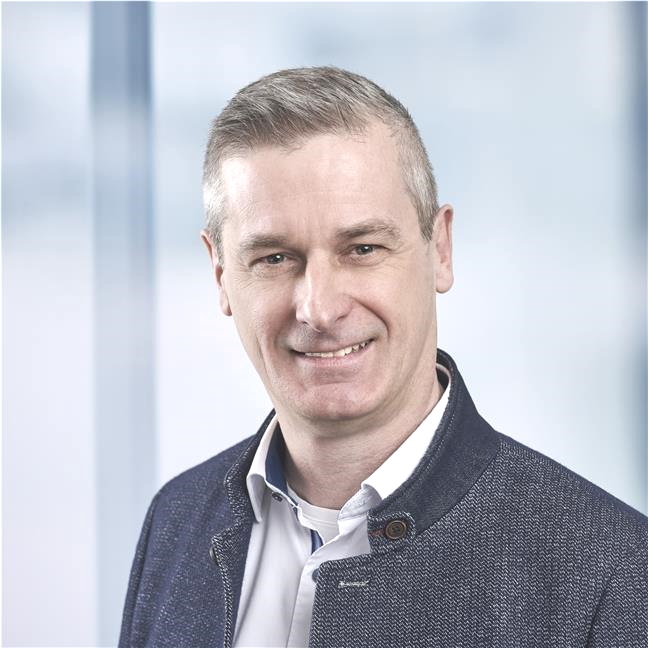 Dr. Gerald Sammer
Founder & CEO
Dr. Gerald Sammer
Founder & CEO
Interactive Range Simulation
Adjust the controls and see live how temperature, age, driving mode, and HVAC affect range.
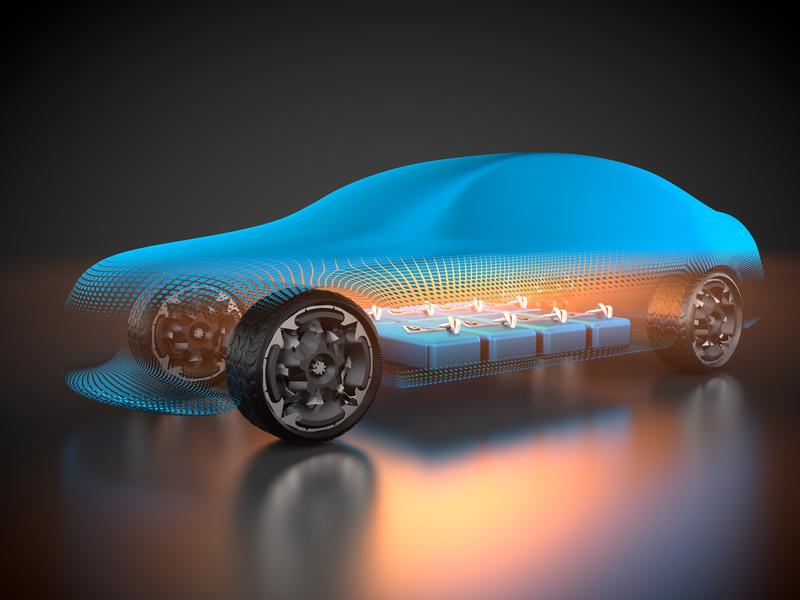
Case Study: Real-World Range Loss
A simulation-based analysis – step by step.
A fleet operator reports 40% range loss after 3 years
22 Electric Light-Duty Trucks in a delivery fleet in northern Germany. Drivers report drastically declining range since the second winter. The leasing company demands an independent assessment.
Is this normal? Is there a battery defect?
Analyzing charging history and usage patterns
OBD data and charging logs reveal: the fleet charges exclusively via DC fast charger. Average 1.2 fast charges per day, often at SOC <15%.
Modeling temperature × charging behavior × aging
Simulation combines real usage profile with electrochemical aging model and climate data from Hamburg.
What causes the 41%? A decomposition.
Simulation enables isolated analysis of each individual factor.
Fact-based clarification instead of speculation
The fleet operator receives a robust report with reproducible simulation. The leasing company accepts the result. An expensive dispute is avoided.
This is how I work. Do you have a similar case?
Discuss your projectServices
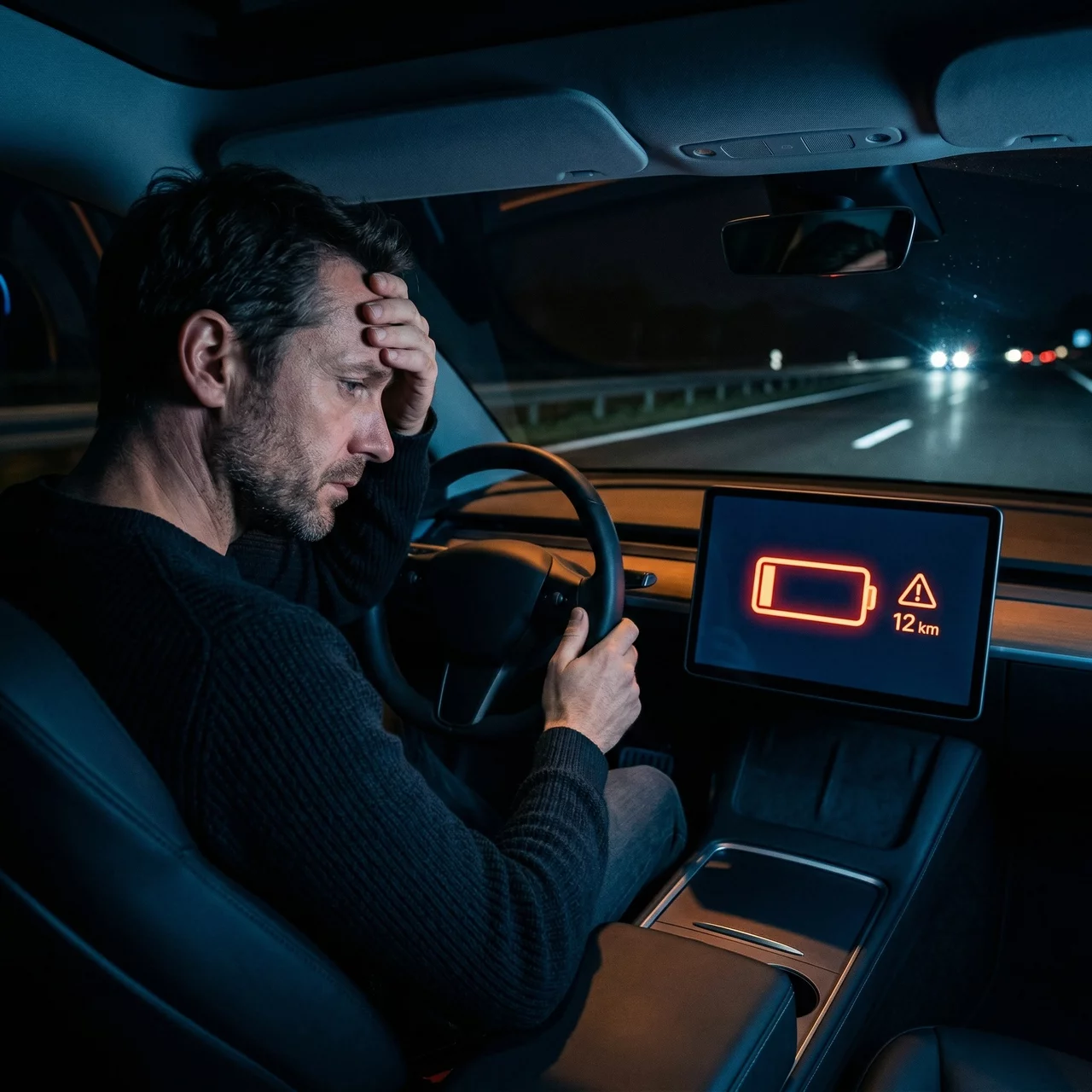
Range Analysis

Battery Health & Aging
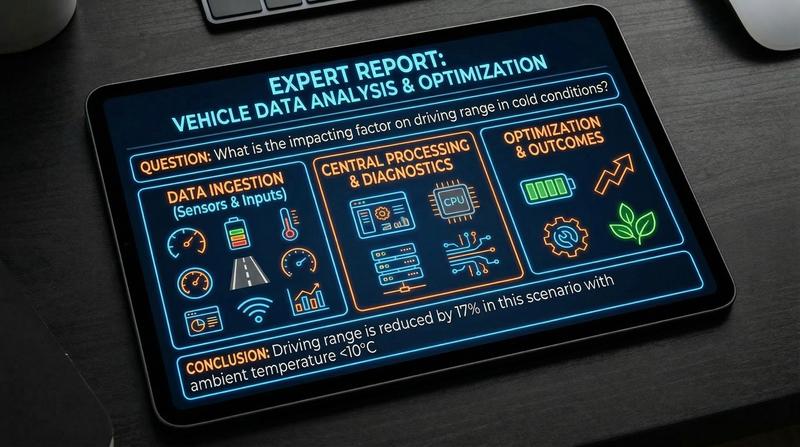
Damage Analysis
Methodology
I use simulation-supported analyses to reproduce real-world technical situations in a structured and traceable way under defined boundary conditions.
- Based on publicly available technical information, manufacturer data, and – where applicable – measurement, test, or field data
- Systematic examination of usage profiles, temperature, load conditions, charging history, and environmental conditions
- Reproducible analyses and robust, transparent conclusions
- Objective clarification of complex interdependencies and traceable evaluation of scenarios

About
In over 30 years in automotive, I have learned one thing: the best technologies don't fail because of physics – they fail because of quality.
That is why I founded simotive.ai – an independent consultancy focused on AI, simulation, and quality management for electric mobility.
My focus: range analysis, battery aging, and predictive AI-supported modeling for fact-based clarification, for example in the fields of damage analysis or valuation.
Until 2025, I led global battery and EV projects at AVL as Principal Business Field Manager. In addition, I was a member of the technical steering committee of ASAM for 15 years, a standardization body for automotive standards in measurement technology, simulation, and autonomous driving.
My academic background in economics, computer science, and electrical engineering has shaped my conviction that solutions must not only be technically convincing, but above all create a clear value for the user.
If you are wondering how my expertise in automotive engineering, combined with simulation and AI, can improve your results – let's talk.
Dr. Gerald Sammer
Founder & CEO, simotive.ai
Contact
Do you have a technical question about electric mobility? Let's discuss how simulation-based analysis can help you.
gerald.sammer@simotive.aiDiscuss your project